

The UK remains one of the world’s most trusted property markets, but in 2026, where you invest matters more than ever. With mortgage costs normalising and regional markets pulling ahead of the capital, the best returns are no longer found by default in London. They’re in cities with strong jobs growth, chronic housing undersupply and yields that comfortably outpace the national average.
Below, we break down the best UK cities for property investment in 2026, the data behind each, and the standout developments our clients are securing in them. As an off-market specialist, Off-Market Realty focuses on sourcing these opportunities before they reach the open market.
UK Property Investment in 2026: The Big Picture
After a soft 2026, forecasters expect a strong run to the end of the decade. Savills projects around 18.5% cumulative UK house-price growth by 2030, while JLL puts it closer to 20%. Crucially, that growth won’t be evenly spread: the North West and Yorkshire are forecast to lead at roughly 25%, while London trails at around 10.6%. Rents are expected to rise sharply too, many major cities are forecast to see rental growth of around 28–31% between 2025 and 2030.
The takeaway for investors: the strongest combination of yield and capital growth in 2026 sits in the regional powerhouse cities, not prime central London.
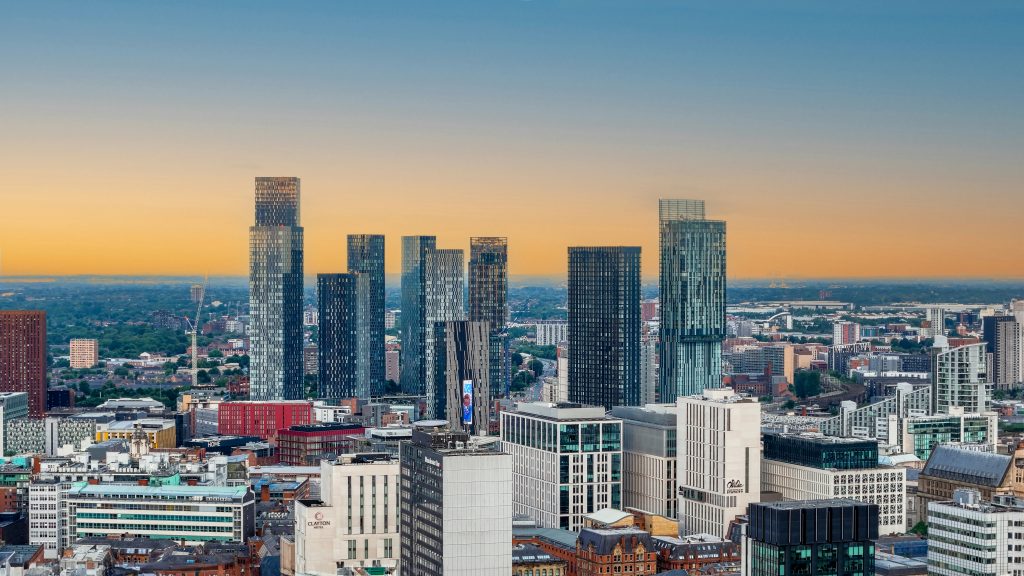
Manchester — The UK’s Standout Investment City
Manchester is, on the data, the best all-round UK city for property investment in 2026. City-centre average prices sit around £253,000, a fraction of London, while rental yields run about 5.6–6%. JLL forecasts Manchester price growth of roughly 19.3% by 2028, ahead of the national average, driven by a vast regeneration pipeline and one of Europe’s fastest-growing tech, media and finance sectors.
This is where we’re most active. Piccadilly Wharf offers modern city-centre apartments from £299,000 with projected yields up to 6%. Our newest Manchester opportunity, West Gate at St John’s Waterside, sits inside a £1 billion regeneration zone creating 10,100 jobs, two riverside towers delivered by Renaker, Manchester’s leading developer, from £297,500 with projected yields of 5–6%. Both are positioned exactly where regeneration and employment growth are concentrated.
Leeds — Strong Yields and Yorkshire Growth
Leeds is one of the UK’s strongest yield cities, with gross rental yields averaging around 6–6.5% and select postcodes higher still. As the financial and legal hub of Yorkshire, a region Savills expects to grow around 25% by 2030, Leeds combines affordability, a large young-professional and student population, and a fast-expanding city centre.
Our Aire Gardens development captures this: Leeds city-centre apartments from £197,000 with projected long-let yields up to 6.4% gross. It’s one of the most affordable entry points into a top-tier regional city.

London — Prestige and Long-Term Security
London’s growth forecast is the UK’s most modest (around 10.6% to 2030) and its prime yields the lowest, but it remains unmatched for stability, global tenant demand and long-term store-of-value appeal. The smart London play in 2026 is the outer, better-value zones rather than prime central postcodes. Our Wimbledon Bridge development offers well-connected London apartments from £487,000 with projected yields up to 5%, a foothold in the capital with stronger income than prime central typically allows.

Birmingham — Balanced, Big-City Fundamentals
The UK’s second city offers a balanced profile: rental yields around 5.5% and steady long-term growth supported by major regeneration, HS2-driven investment and a large graduate-retention pipeline. Birmingham suits investors who want scale, liquidity and a blend of income and appreciation rather than the highest headline yield.
Liverpool —The Highest Headline Yields
For investors prioritising immediate rental income, Liverpool delivers some of the best gross yields in the country, commonly 6–7%, with certain central postcodes (L1, L3, L6, L7) reaching 7% or more. Prices remain low relative to other major cities, keeping the barrier to entry down. Liverpool suits a yield-first strategy, where strong day-one income matters more than maximum capital growth.
Beyond the Big Cities: Where Else to Look
The best returns aren’t only in the major metros. Three other UK opportunities stand out in 2026:
- Oxford: one of the UK’s most supply-constrained, resilient markets, underpinned by a world-class university and booming life-sciences economy. Our Scholars Residence offers boutique apartments in prime Summertown.
- Market towns: affordable, high-yield and increasingly in demand as hybrid working spreads. Our Textile Building in Newark-on-Trent, a converted Victorian mill, targets yields around 6% in a regenerating East Midlands town.
- Brighton: one of the UK’s strongest coastal rental markets, with deep tenant demand and lifestyle appeal. Our Goldstone Apartments offer modern homes in this supply-tight south-coast city.
Talk to Off-Market Realty
Ready to invest in one of the UK’s best property markets? Explore our current UK opportunities or contact our team to discuss which city and development fit your investment goals, backed by research, and sourced before they hit the open market.
Frequently Asked Questions
Which UK city is best for property investment in 2026?
On the data, Manchester offers the best all-round balance of rental yield (around 5.6–6%) and forecast capital growth (roughly 19% by 2028), supported by major regeneration and jobs growth.
Which UK city has the highest rental yields?
Liverpool leads on headline gross yields, commonly 6–7% and higher in central postcodes, followed closely by Leeds. These suit investors prioritising rental income.
Is London still worth investing in?
Yes, for stability and long-term value rather than high yield or fast growth. Better-value outer London zones typically offer stronger income than prime central postcodes.
Where is UK house-price growth expected to be strongest?
The North West and Yorkshire are forecast to lead at around 25% by 2030 (Savills), well ahead of London at roughly 10.6%, which is why regional cities dominate this list.